
Fenestration Knowledge Series · Article 01
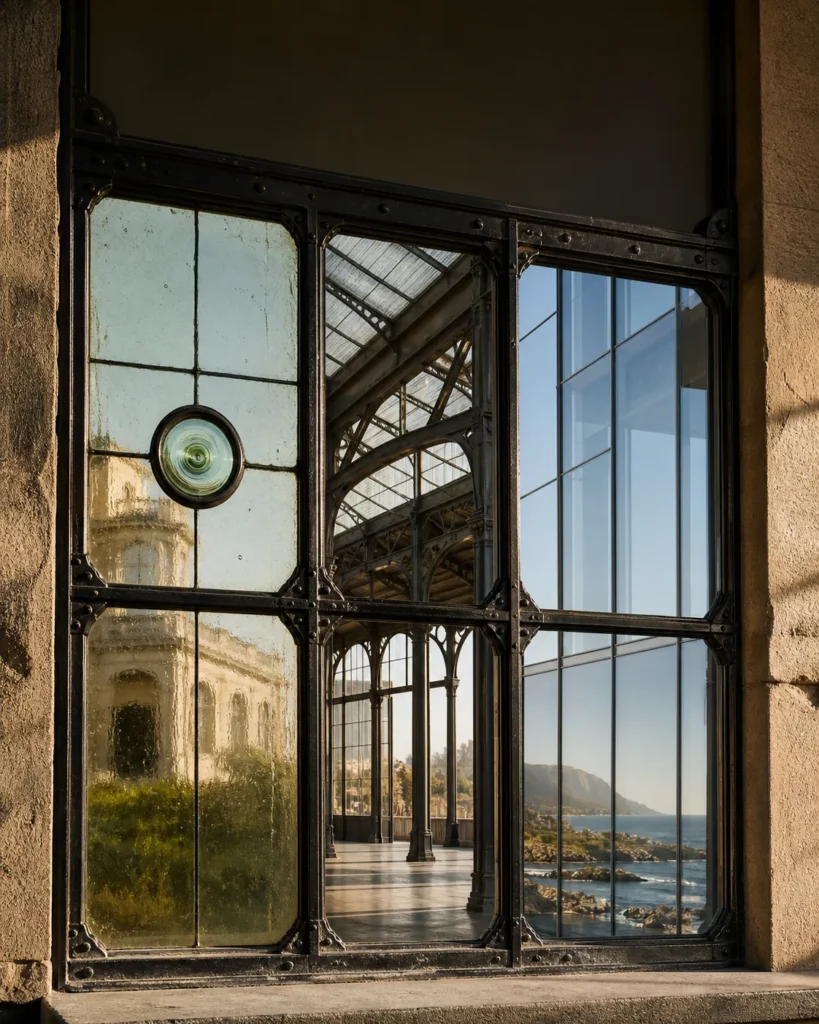
There are very few building materials that have changed architecture as profoundly as glass.
Today, we expect to stand inside a building and look through a perfectly clear window several metres wide. We expect that glass to resist wind and rain, contribute to security, reduce noise, control solar heat and, when correctly specified, protect occupants if it breaks.
For most of human history, that would have been almost unimaginable.
The history of glass is not simply the history of a material. It is the history of our attempt to control light.
For anyone involved in windows, doors, glazing or heritage restoration, it is a remarkable story—because each advance in glassmaking changed what architects could draw and what window makers could build.
That same whole-opening perspective guides D&G Window Solutions when we design custom steel windows and metal windows, specify custom aluminium windows and doors, or assess historic fabric for repair.
Before windows: the birth of man-made glass
Natural glass existed long before people learned to manufacture it. Obsidian, for example, is volcanic glass formed when molten rock cools rapidly.
Manufactured glass came much later. The Corning Museum of Glass dates the earliest human-made glass to about 4,000 years ago, with early objects found mainly in Mesopotamia and Egypt. Craftspeople learned to heat a mixture based on sand, soda and lime until it became a workable material.
But this was not yet window glass. It appeared in beads, jewellery, small vessels and decorative inlays—valuable objects associated with status and trade. A transparent wall was still centuries away.
The Romans put glass into buildings
A decisive turning point came in the Roman world. Glassblowing developed in the eastern Mediterranean around the middle of the first century BCE and spread rapidly through the Roman Empire. It made glass objects quicker to form and brought the material within reach of a much wider market.
Roman builders also used flat glass for architectural glazing. Those panes were nothing like the flawless sheets we know today. They could be small, uneven in thickness, green or blue-green, bubbly, rippled and visibly distorted.
Yet they performed an extraordinary function: a building opening could admit daylight while offering far better protection from wind and weather. More than two thousand years later, that remains the central promise of fenestration.
When imperfection was normal
Perfectly flat, colourless glass is a very modern expectation. Historic panes record their materials and manufacture in subtle ways: a slight tint, tiny bubbles or “seeds”, ripples, tool marks and variations in thickness.
Today, those characteristics might be called defects. In heritage work, they may be part of the building’s significance. An old pane changes reflections and transmitted light in a way that modern float glass does not reproduce.
That is why historic glass should not automatically be replaced because it is imperfect. Sometimes the imperfection is the history.
Crown glass: making a window from a spinning disc
One of the most ingenious hand-made window-glass methods became known as crown glass. A gather of hot glass was transferred to a pontil rod and spun. Centrifugal force opened it into a broad circular disc from which smaller panes could be cut.
Concentric ripples and curved bubble patterns can reveal the process. The thicker centre of the disc produced the familiar bull’s-eye, a feature now often reproduced decoratively.
The size limits of early glass production explain an important feature of historic architecture: small panes were not merely a fashion. They were a manufacturing necessity. Mullions, glazing bars and lead cames allowed craftspeople to assemble many manageable pieces into a larger glazed opening.
Technology helped create architectural style.
Cylinder glass and the pursuit of a flatter sheet
Cylinder glass used a different approach. A long glass cylinder was blown, its ends removed, and the tube cut lengthways. Reheating allowed it to open and flatten into a sheet.
It was a major improvement, but the finished glass still carried the gentle movement and waviness associated with mouth-blown glazing. In genuinely old steel, timber or metal-framed windows, these clues can help us understand how the glazing evolved with the building.
Plate glass and the desire for bigger windows
Architects and clients wanted what they have always wanted: more light and larger views.
From the late seventeenth century, casting glass and then grinding and polishing both surfaces made larger, clearer panes possible. The process demanded substantial labour and energy, so plate glass was first associated with mirrors, palaces, prestigious buildings and wealthy clients.
But the direction was established. Buildings were becoming more transparent, and their window openings were becoming larger.
The Industrial Revolution changes the window
Industrialisation transformed glass manufacturing. Better furnaces and mechanised processes improved consistency and increased output. By the nineteenth and early twentieth centuries, drawn sheet and plate-glass methods steadily reduced the cost of glazing.
Shopfronts changed. Factories could admit vast areas of daylight. Steel and metal window systems could accommodate increasingly practical pane sizes. The iron-and-glass buildings of the industrial age pointed toward the glazed façades that now define airports, office towers and contemporary homes.
One enormous problem remained: producing truly flat glass efficiently.
The float-glass revolution
In 1952, British engineer Sir Alastair Pilkington and his research team began developing the modern float-glass process. The breakthrough was elegantly simple in principle: form a continuous ribbon by floating molten glass over a bath of molten tin.
The glass naturally develops flat, parallel surfaces, removing much of the grinding and polishing previously required. After seven years of development, Pilkington announced the process to the glassmaking world on 20 January 1959. It became the global standard for high-quality flat glass.
Large, clear, relatively distortion-free panes could now be produced consistently and economically. Much of the architectural glass around us today begins with a descendant of that process.
Glass stops being just a transparent barrier
During the second half of the twentieth century, the question changed from “Can we make glass bigger and clearer?” to “What else can we make glass do?”
- Laminated safety glass: two or more layers bonded with an interlayer. Depending on its make-up, laminated glazing can retain fragments after breakage and contribute to safety, security, acoustic and solar-control performance.
- Toughened glass: heat treatment changes the strength and breakage behaviour of glass, making it suitable for applications where ordinary annealed glass would be inappropriate.
- Insulated glazing: two or more panes separated by a sealed cavity can reduce heat transfer and improve comfort.
- Low-emissivity glass: microscopically thin coatings manage radiant heat while preserving useful visible light.
- Solar-control glass: modern coatings and compositions can reduce unwanted solar heat gain while maintaining daylight and outward visibility.
- Acoustic and security glazing: carefully designed make-ups can address project-specific sound and threat requirements.
The glass in a window has evolved from a weather barrier into a highly engineered part of the building envelope. Its selection must be coordinated with the frame, glazing method, hardware, drainage, exposure and intended use.
What historic glass teaches us about heritage windows
An old steel or metal window is not simply a frame containing an interchangeable piece of glass. The frame profile, glazing bars, pane proportions, hardware, putty line and glass may all contribute to its architectural character.
Replacing rippled hand-made glass with completely uniform modern float glass can subtly—but noticeably—change a façade. That does not mean every old pane can or should be retained. Safety requirements, damage, structural condition, exposure and the building’s intended use all matter.
- Repair where appropriate.
- Retain significant original material where practical.
- Replace where safety or performance requires it.
- Understand what is being removed before history is discarded.
That repair-led judgement sits at the centre of responsible heritage work. It is also why D&G assesses the complete opening before recommending steel and metal window refurbishment, reglazing or replacement.
From a tiny pane to a glass façade
Consider how far the technology has travelled. Glass began as a rare decorative material. Roman builders used small panes to bring protected daylight into buildings. Glassmakers spun discs and blew cylinders. Industrial manufacturers developed sheet and plate glass. Float glass then made large, nearly flawless panes commercially practical.
Today, we specify laminated, toughened, insulated, acoustic, solar-control and coated glass capable of influencing the safety, comfort and energy performance of an entire building.
Yet the purpose of the window has never really changed. We still want to stand safely inside a building, protected from the elements, while remaining connected to the world outside.
Glass does not merely fill a window. It changed what a window could be.
The D&G Fenestration Knowledge Series
This is the first article in our Fenestration Knowledge Series: practical, technically grounded guidance on glass, windows, doors, custom steel and aluminium systems, and heritage repair.
Continue with Article 02: Why Old Glass Looks Wavy—and Why It Matters, a closer look at the manufacturing evidence preserved in historic panes.
The series now continues with Article 03: The History of Steel Windows.
- Coming next: Why heritage steel windows should be repaired before they are replaced
- Planned: How modern safety glass actually works
Working on a heritage window, a custom steel opening or a modern aluminium glazing project in Cape Town or the Western Cape? Request a proper assessment from D&G Window Solutions.